How the LDA prices cost rental: STAR, equity and viability
allen
June 23, 2026
5 min read
Key takeaways
The LDA delivers cost rental directly through Project Tosaigh and STAR, with State equity averaging about EUR 128,000 per unit in 2024. Test any scheme with the cost rental feasibility calculator.
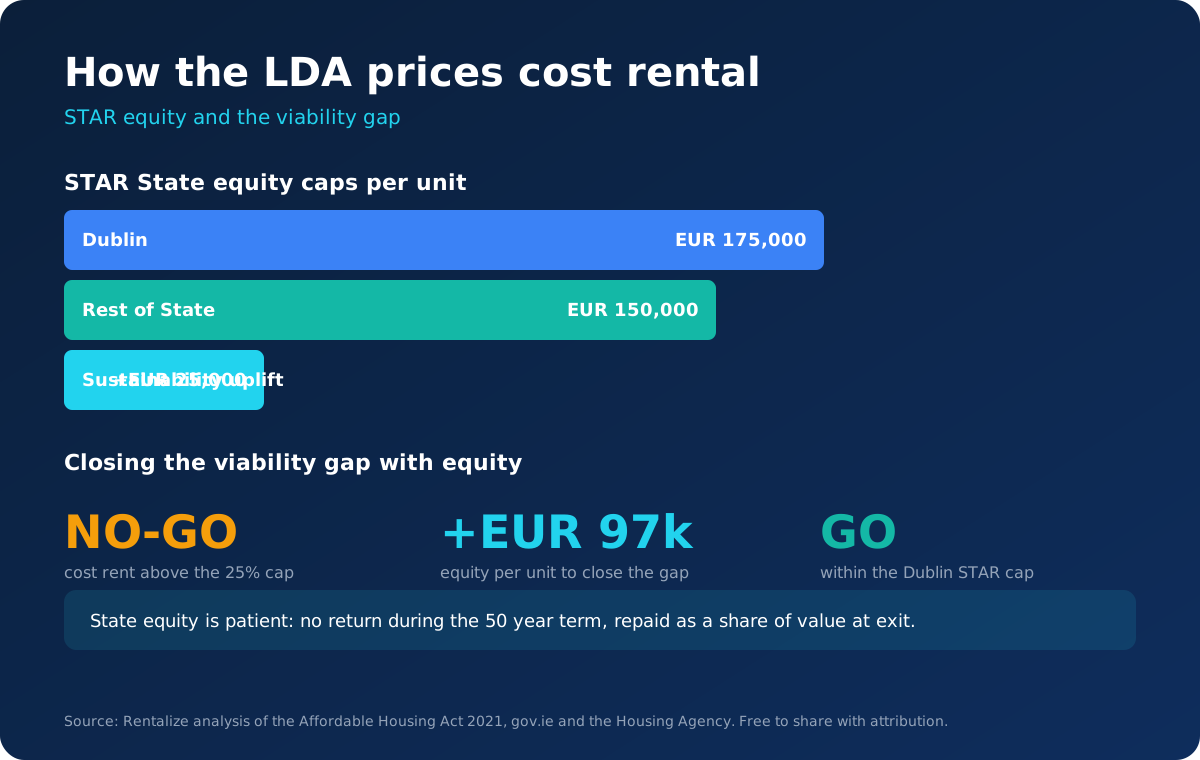
STAR provides State equity of up to EUR 175,000 per unit in Dublin and EUR 150,000 elsewhere, plus EUR 25,000 for sustainable development.
The equity is patient: no interest or return during the 50 year term, settled as a share of value at exit.
Cost rents must be at least 25% below market and homes designated as cost rental for at least 50 years.
The viability question is how much equity a scheme needs to land below the 25% line, and whether that figure fits within the STAR cap.
The Land Development Agency has become one of the largest deliverers of cost rental in Ireland, using a mix of its own development, Project Tosaigh and the Secure Tenancy Affordable Rental scheme. In 2024 its cost rental equity averaged about EUR 128,000 per unit.
Pricing an LDA cost rental scheme is a viability exercise. The rent must recover cost over at least 50 years and sit at least 25% below the market, and the lever that makes that work is State equity rather than cheap debt.
This article explains how the LDA and STAR proposers price cost rental: the STAR equity caps, how patient equity changes the rent, what the viability gap looks like in numbers, and how to test a scheme before it goes forward.
The LDA prices cost rental on the cost of building, financing and managing the homes, set below the market rents in the area. It delivers through direct development on State and acquired land, through Project Tosaigh forward funding, and through the Secure Tenancy Affordable Rental scheme that also opens the same equity to AHBs and private proposers.
STAR provides State equity of up to EUR 175,000 per unit in Dublin and EUR 150,000 elsewhere, with a further EUR 25,000 for sustainable development. With up to EUR 750 million committed, the scheme aims to support thousands of cost rental homes.
The equity is patient capital. There is no interest or return during the 50 year term, and at exit the State takes a proportionate share of the property value, extends the agreement, or buys at market value. Because the equity carries no annual cost, it displaces the most expensive commercial debt in the stack, which is exactly what brings the rent below the 25% line.
Source: Rentalize analysis of the Housing Agency STAR scheme and gov.ie. Free to share with attribution.
The viability gap in numbers
Take a higher cost Dublin scheme: EUR 450,000 per unit and a EUR 2,200 market rent. On commercial debt alone the cost rent lands near EUR 2,030, only about 7.7% below market, a clear no-go. Closing that gap to the 25% below market line takes roughly EUR 97,000 of equity per unit.
That figure sits comfortably inside the EUR 175,000 Dublin STAR cap, so the scheme becomes viable with State equity. The same scheme in a lower rent area, or at a higher cost, can need equity beyond the cap, which signals it does not work as cost rental without a change in cost or policy. The feasibility calculator computes the exact equity per unit and flags whether it fits within the cap.
What this means for proposers and partners
STAR is open to the LDA, Approved Housing Bodies and private proposers, with proposers entitled to a reasonable profit. For a developer, the appraisal question is the same as for the LDA: how much equity gets the rent below 25%, and does it fit the cap.
The LDA prices rent on the cost of building, financing and managing the homes, set at least 25% below market and recovered over the cost calculation period. State equity rather than cheap debt is what makes the sub-market rent work.
How much is STAR equity per unit?
STAR provides State equity of up to EUR 175,000 per unit in Dublin and EUR 150,000 elsewhere, with a further EUR 25,000 for sustainable development.
Is STAR equity repaid?
There is no interest or return during the 50 year term. At exit the State takes a proportionate share of property value, extends the agreement, or buys at market value.
Who can apply for STAR?
STAR is open to the LDA, Approved Housing Bodies and private proposers. Proposers are entitled to a reasonable profit, with homes designated as cost rental for at least 50 years.
How do I know if an LDA scheme is viable?
Model the development cost, market rent and STAR equity in the feasibility calculator. It reports the cost rent, the discount versus market, and the exact equity per unit needed to reach the 25% below market line.
If you would like to see how Rentalize handles this in practice, you can book a 20-minute walkthrough. We will use one of your own properties as the worked example.
Each of Ireland's 31 Local Authorities runs its own differential rent scheme, with different percentages, disregards and allowances. Why the patchwork exists, what it...
Income verification for Irish AHBs and Local Authorities in 2026. Open Banking verification, structured document capture, GDPR-compliant retention, and how to meet the AHBR...


 Affordable Housing