Chasing rent arrears: the Irish landlord’s legal guide
allen
June 14, 2026
13 min read
Key takeaways
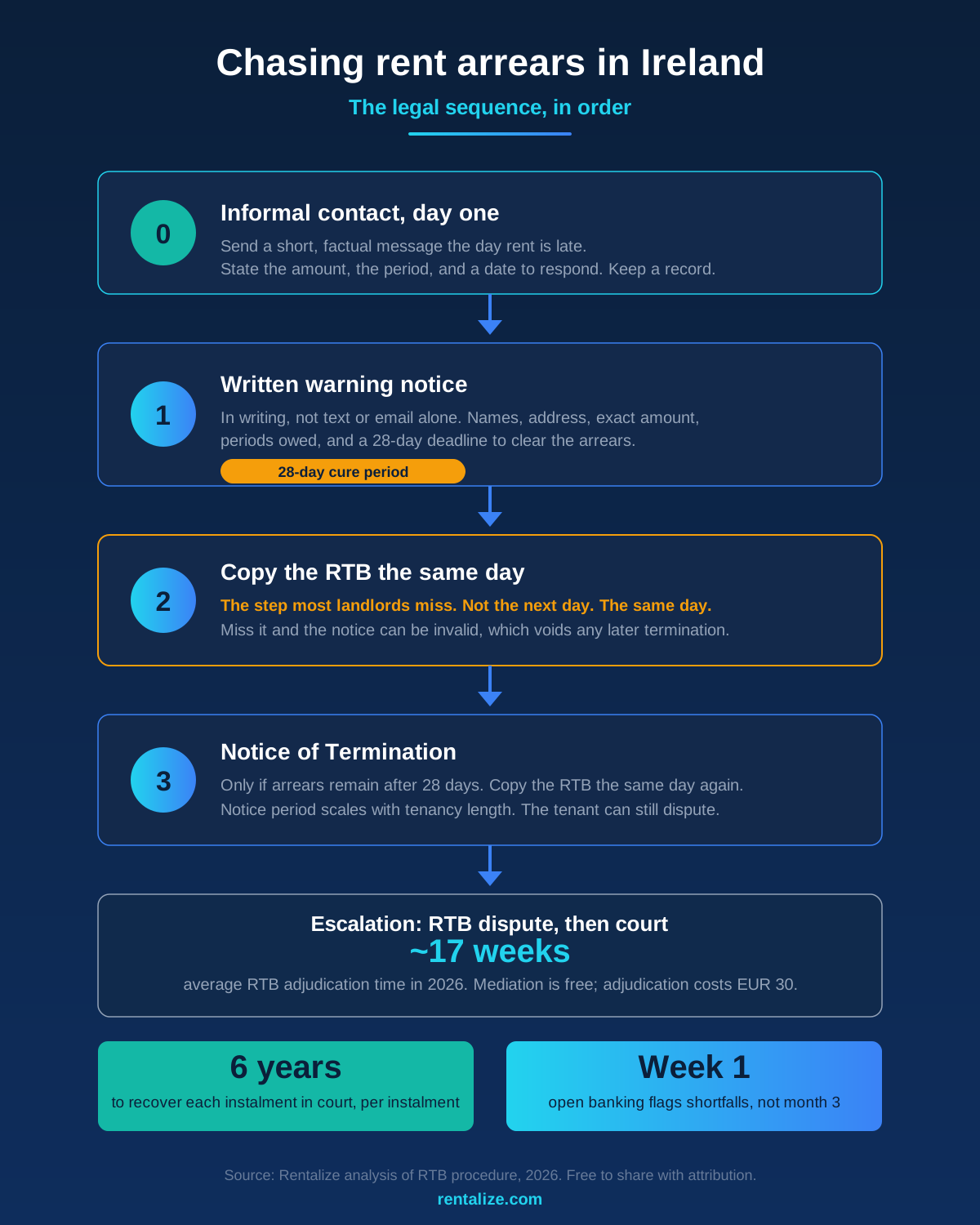
The legal route for recovering unpaid rent is a fixed sequence: informal contact, then a 28-day written warning notice, then a Notice of Termination. Skipping or misordering a step can reset the whole process.
You must send a copy of the warning notice to the RTB on the same day you serve it on the tenant. Miss that and the notice can be invalid, which makes any later termination notice defective too.
RTB adjudication is averaging 17 weeks in 2026, so a properly drafted repayment plan is often faster than enforcement and keeps a working tenancy intact.
Each missed rent instalment becomes unrecoverable in court 6 years after it fell due. The clock runs per instalment, not from the end of the tenancy.
Catching a shortfall in week one rather than month three is what keeps arrears small. Open banking rent collection flags partial and late payments the moment they happen.
Many landlords lose money on rent arrears not because the law fails them, but because they act too late or in the wrong order. Chasing rent arrears as a landlord in Ireland follows a specific legal sequence, and a single misstep can invalidate a notice and force you back to square one.
This guide covers the full procedure, from the first call to RTB adjudication and court enforcement, with templates you can adapt today. The aim is to give you a clear order of operations so you are never guessing about what comes next when rent does not arrive.
Smarter landlords are also using platforms with built-in arrears detection to stop the problem early. Rentalize’s AI copilot, Talia, monitors incoming rent transactions through open banking in real time and flags shortfalls before a full month is missed, according to Rentalize’s own product documentation. Even the best tools cannot replace knowing the law, so what follows lays out every step in the right order.
Why arrears spiral and what to do the moment rent is late
Most arrears start small and become large because neither side acts quickly. A tenant who misses one week feels embarrassed and hopes to sort it quietly. A landlord who does not follow up assumes it will resolve itself. That gap is precisely where arrears compound. The legal process requires a 28-day warning notice before any termination action, which means the earlier you intervene informally, the more options you retain.
The day rent is late, send a short, factual message. State the amount owed, name the period it covers, and ask for a response or payment by a specific date. Leave the door open for a conversation. The tone matters: you are not threatening, you are informing. Something like “Rent of EUR 1,200 for June was due on the 1st and has not come through yet. Please let me know what is happening by Wednesday” does the job. It creates a record, signals that you are paying attention, and gives the tenant a way to engage without feeling cornered.
Rentalize’s AI copilot Talia monitors payment behaviour through its open banking integration and flags shortfalls the moment they appear. If a payment is delayed or partial, Talia can auto-draft a compliant chase-up message for your review, a feature Rentalize describes in its product documentation. That is early intervention done automatically, not reactively. For landlords managing several tenancies, it is the difference between catching a problem in week one and discovering it in month three.
The landlord’s legal sequence for recovering unpaid rent
If informal contact does not resolve the arrears, you move into the formal process. There are three steps, and each one must be completed correctly before the next one counts. Skipping or mishandling any step can reset the entire process, forcing you to start again from the beginning.
Step 1: Serve a written rent arrears warning notice (28 days)
The warning notice must be in writing. Email or text alone is not sufficient. It must include the tenant’s name, the property address, the exact amount owed, the rental periods it covers, and a clear statement that the tenant has 28 days to clear the arrears or face a Notice of Termination. The 28-day clock starts from the later of the date the tenant receives the notice and the date the RTB receives their copy. That second trigger is the step many landlords overlook entirely.
Step 2: Copy the RTB on the same day
The law requires that you send a copy of the warning notice to the Residential Tenancies Board on the exact day it is served on the tenant. Not the next day. The same day. Failure to do this can render the entire notice invalid, meaning any subsequent Notice of Termination built on it is also defective. Send the copy to [email protected] and keep the sent confirmation, but verify this address against current RTB guidance on the RTB website before serving, as submission channels can change.
If you are posting it, use registered post and retain the receipt. The RTB then contacts the tenant to make them aware of MABS and other support services. For landlords who prefer to automate compliance steps like RTB submissions, practical options for RTB registration automation can reduce the risk of human error.
Step 3: Serve the Notice of Termination if arrears remain unpaid
If the arrears are still outstanding after 28 days, you may serve a Notice of Termination. This notice must also be copied to the RTB on the same day it is served. The notice does not end the tenancy immediately; the tenant retains rights to dispute through the RTB. The required notice period depends on how long the tenancy has been in place, so check the current RTB guidance for your specific situation before serving.
Proof of service matters at every step. Verify which methods the RTB and courts currently accept, but registered post and recorded delivery are widely used options. You can download an official RTB Notice of Termination template to ensure your form meets the required standards.
Source: Rentalize analysis of RTB procedure, 2026. Free to share with attribution.
Letter and notice templates for landlords chasing rent arrears
The initial chase-up letter
Keep this factual and short. The goal is to create a record and give the tenant a clear path to resolve things without escalation.
I am writing regarding rent due under the tenancy at [property address]. Our records show the following is outstanding:
Rent due for [period]: EUR [amount]
Payments received: EUR [amount]
Total arrears outstanding: EUR [amount]
Please pay the outstanding amount by [date], or contact me by that date if you believe this is incorrect or would like to discuss a repayment arrangement. If you are experiencing financial difficulty, please get in touch as soon as possible.
Kind regards,
[Landlord name and contact details]
The formal rent arrears warning notice
This is the legally required document before a termination notice can be served. It must state the breach clearly, itemise the arrears by period, specify the 28-day cure period, and warn that a Notice of Termination may follow. Keep the wording direct and factual. A defective notice is worse than a delayed one, because it resets the entire process.
The repayment plan agreement
A written repayment plan should name both parties, identify the tenancy address, state the total arrears as of a specific date, and set out a schedule of instalments with exact amounts and due dates. It must confirm that current rent continues in full alongside the repayment schedule. Include a clause stating that if any instalment is missed and not remedied within a set number of days of written notice, the full balance becomes due and the landlord may resume formal action. Add a line confirming the agreement does not vary the tenancy except as expressly stated.
Repayment plans: when to offer one and how to make it stick
RTB adjudication is currently averaging 17 weeks to resolve in 2026, and court enforcement adds further time and legal cost on top of that. A repayment plan, properly structured, can recover the debt faster, preserve a working tenancy, and avoid the risk that a defective notice derails the legal process entirely. If the tenant is communicating and the arrears are manageable, a repayment plan is usually the smarter first move.
For a plan to be enforceable in practice, both parties should sign it, terms should be specific and unambiguous, and the agreement should include a “time is of the essence” clause for each payment. These are considered sound drafting recommendations; seek legal advice to confirm enforceability in your specific circumstances. Keep current rent and arrears repayments entirely separate in the schedule. If the tenant misses an instalment, you retain the right to serve a warning notice as if no plan existed. That clause is not punitive; it is what gives the plan its teeth and what protects you if the tenant treats it as optional.
One practical note for HAP tenancies: if the tenant is also falling behind on their assessed contribution to the local authority, the HAP payment to you may be suspended, turning a partial arrears problem into a full one very quickly. Address any HAP contribution arrears as a separate issue with the council, and treat the top-up owed to you through the normal private rental process.
When to escalate: RTB disputes and court enforcement
RTB adjudication is currently averaging 17 weeks to resolve in 2026, a timeline that makes early intervention worth every effort. The RTB offers two pathways: mediation and adjudication. See the official RTB guide to adjudication for details on how it works and what to expect. Mediation is free, faster, and suitable when both parties are willing to engage. It produces an agreement rather than an enforceable order, so it works best when the relationship is not entirely broken down. Adjudication involves a formal hearing, costs EUR 30 to file, and produces a binding determination order that is enforceable through the courts if the tenant does not comply.
If a tenant ignores an RTB determination order, you apply to the Circuit Court to enforce it. This adds further time and legal cost, and you bear those costs unless the court awards otherwise. For practical guidance on debt recovery procedure and what enforcement before the courts entails, a useful reference is the District Court debt recovery guide. The process and likely timeline for enforcement depend on the specific circumstances, so take legal advice at that stage rather than trying to handle it alone.
On the statute of limitations: each missed rent instalment becomes unrecoverable in court after six years from the date it was due. The clock runs per instalment, not from the end of the tenancy. You can still pursue recent arrears even if older missed payments are time-barred. The limitation affects court recovery only; it does not erase the breach or prevent RTB action on more recent arrears.
Building your evidence pack before you file
RTB and court cases are decided on documentation. Before you file anything, assemble the following:
The signed tenancy agreement showing the rent amount and due date
A rent account ledger showing what was due, what was paid, and the running balance
Bank statements or open banking records proving non-payment or partial payment
The rent arrears warning notice and proof of service
All correspondence in which the tenant acknowledges the debt or is chased for payment
The Notice of Termination with proof of service, if served
Open banking platforms such as Rentalize Pay can generate an auditable, real-time record of every rent transaction, including amounts received, dates, and any shortfall, and can reduce the need for manual reconciliation where tenancy-linked transaction tagging is in use. A landlord who has been collecting rent through Rentalize arrives at an RTB hearing with a clean, date-stamped transaction history that leaves no ambiguity about what was paid and when. For background on automated rent collection via open banking, see our guide to open banking and rent collection in Ireland. In a dispute where the tenant claims to have paid and you claim otherwise, that record can mean the difference between a fast resolution and a prolonged one.
How Rentalize handles arrears before they reach a notice
The legal process in this guide is the fallback. The goal is never needing it. Rentalize and its AI copilot Talia automate the early detection that keeps arrears small: open banking watches every incoming rent payment, flags partial and late amounts the moment they land, and drafts a compliant chase-up message for your review. That is the week-one intervention that stops a missed week becoming a missed quarter.
For landlords and agents who want one place to manage tenancies, payments, and the paper trail that makes any RTB case watertight, Rentalize 360 keeps the rent ledger, correspondence, and transaction history in a single auditable record. If you run a portfolio across multiple tenancies, the same record-keeping that prevents arrears is also what wins the hearing when prevention is not enough. Letting agents and property management companies use it to keep every client’s arrears position visible at a glance.
How long does a rent arrears warning notice give the tenant in Ireland?
The warning notice gives the tenant 28 days to clear the arrears. The clock starts from the later of the date the tenant receives the notice and the date the RTB receives its copy, so serving both on the same day is important to avoid disputes about when the period began.
Do I really have to copy the RTB on the same day I serve the tenant?
Yes. The law requires the copy to reach the RTB on the same day the notice is served on the tenant. Failing to do this can render the warning notice invalid, which in turn makes any Notice of Termination built on it defective. Verify the current submission channel on the RTB website before serving.
How long does RTB adjudication take in 2026?
RTB adjudication is currently averaging around 17 weeks to resolve in 2026. Court enforcement of a determination order adds further time on top of that, which is why a structured repayment plan is often the faster route to recovering the debt.
Can I still recover old rent arrears?
Each missed instalment becomes unrecoverable in court six years after it fell due, and the clock runs per instalment rather than from the end of the tenancy. You can still pursue more recent arrears even if older missed payments are time-barred, and the limitation does not prevent RTB action on recent arrears.
Is a repayment plan better than serving a notice?
Often, yes. If the tenant is communicating and the arrears are manageable, a signed repayment plan with a “time is of the essence” clause can recover the debt faster than a 17-week adjudication, preserve the tenancy, and avoid the risk of a defective notice. Keep current rent and arrears repayments separate, and retain the right to serve a warning notice if an instalment is missed.
What evidence do I need for an RTB rent arrears case?
Assemble the signed tenancy agreement, a rent account ledger, bank or open banking records proving non-payment, the warning notice with proof of service, all chase-up correspondence, and the Notice of Termination if served. A clean, date-stamped transaction history from an open banking rent collection tool removes most of the ambiguity that prolongs these cases.
Key takeaways Making Tax Digital for Income Tax has applied since April 2026 to qualifying income above 50,000 pounds. From April 2027 the threshold...


 Software Selection