
 Property Management
RTB disputes: how a case works, what it costs and how long it takes
Key takeaways A landlord can only bring an RTB dispute about a tenancy that is registered with the RTB. A tenant can bring one...
Key takeaways
On a EUR 1,800 a month apartment, the most anyone can ask a tenant to hand over before they get the keys is EUR 3,600. One month’s deposit and one month’s rent in advance. That has been the law for tenancies created since August 2021, and it still catches people out.
Most of the time it is not bad faith. It is an old habit, or an agent’s template that was never updated, or a “holding fee” that nobody thought of as a payment. The problem is that the rule changed again in July 2024, and the change makes the ad itself the breach.
This is the whole rule in plain terms, with the section numbers if you want to check them. It covers what you can ask for, what you cannot, and how the deposit has to come back at the end.
On this page
Section 19B of the Residential Tenancies Act 2004 sets two caps for securing a tenancy. Advance rent can be no more than 1 month’s rent. The deposit can be no more than 1 month’s rent. Both are measured against the rent in the tenancy agreement.
The rule applies to tenancies created on or after 9 August 2021. If a tenancy started before then, the cap did not apply when it was set up, but any new tenancy you create today is covered.
If the rent is paid weekly or fortnightly, the cap is still a month’s worth of rent, not one payment. Work it out from the annual rent if you need to.
The Residential Tenancies (Amendment) Act 2024 changed the wording from 19 July 2024. Payment “shall not be sought” beyond the caps. Before, the question was what the tenant actually paid. Now an advert or an email asking for 2 months’ deposit is a breach on its own, even if nobody pays it.
The same amendment widened who counts as a landlord for this section. It now includes anyone holding a property out as available to rent. In practice that means letting agents and anyone placing the ad, not just the owner.
A tenant who was asked for too much can take a dispute to the RTB, and the RTB can investigate it as improper conduct. It is a cheap thing to get wrong and an easy one to fix: check your listing templates.
Section 19B does not just cap two payments. It says no payment can be sought to secure a tenancy other than the advance rent and the deposit. So anything else charged to get the tenancy is outside the rule, whatever it is called.
A holding fee to take the property off the market, an admin fee for the paperwork, a reference check charge: if it is a condition of getting the tenancy, it is a payment to secure it. If you take a holding payment, treat it as part of the deposit or the first month’s rent, inside the 2 month total.
One thing you can still ask for is money already owed under a previous tenancy or other legal obligation. That is carved out in subsection (4).
The cap does not stop once the tenant moves in. A tenancy agreement cannot require more than 1 month’s rent in advance at any point during the tenancy. Rent paid monthly in advance is fine. A clause requiring 3 months up front each quarter is not.
The 1 month of advance rent paid at the start counts toward this, so it is the same month, not an extra one.
Student Specific Accommodation has one exception. A student can choose to pay more than 1 month in advance if the landlord agrees. Since July 2024 that only applies where the student pays both tuition fees and rent to the same education provider.
So a college renting its own rooms to its own students can take a semester up front if the student wants that. A private purpose-built student block cannot rely on the exception on that basis alone. The deposit cap of 1 month applies either way.
Section 12 requires the landlord to return the deposit promptly. There is no fixed number of days in the Act. In practice, a few days after the keys come back and the property has been checked is reasonable. Weeks is a dispute waiting to happen.
You can only hold back money in two cases. Unpaid rent or other charges due under the tenancy, or the cost of putting right damage beyond normal wear and tear. A check-in report with dated photos is what lets you show the difference. Without one it is your word against the tenant’s at the RTB.
Ireland has a deposit protection scheme on the statute book, from 2015, but it has never been commenced. The landlord still holds the deposit, which is why the paper trail matters so much.
Rentalize Core keeps deposit records with the one-month cap check, and raises deductions from the check-out inventory, compared with the one taken at check-in. When a tenancy ends, the deduction and the evidence behind it are in one place.
Our free tenancy agreement generator writes the deposit and advance rent into the agreement at the start, inside the caps.
If you manage tenancies for other owners, you can book a 20-minute walkthrough or check pricing.
Up to 1 month’s rent, for tenancies created from 9 August 2021. A landlord can also ask for up to 1 month’s rent in advance, so the most a tenant can be asked to pay to secure a tenancy is 2 months’ rent.
No. Since 19 July 2024 even asking for more than 1 month’s deposit is a breach of section 19B, whether or not the tenant pays it. This applies to agents and anyone advertising the property too.
Only inside the caps. No payment can be sought to secure a tenancy other than 1 month’s advance rent and a 1 month deposit. A holding payment has to be treated as part of one of those.
The law says promptly and does not set a number of days. Deductions are only allowed for unpaid rent or charges, or damage beyond normal wear and tear. A tenant can take a dispute to the RTB if the deposit is held back without good reason.
Not in operation. A scheme was legislated for in 2015 but has never been commenced, so landlords still hold deposits directly.
Related reading
Sources: Residential Tenancies Act 2004, sections 12 and 19B, as amended by the Residential Tenancies (No. 2) Act 2021 and the Residential Tenancies (Amendment) Act 2024 (revised text, Law Reform Commission). This is general information, not legal advice.
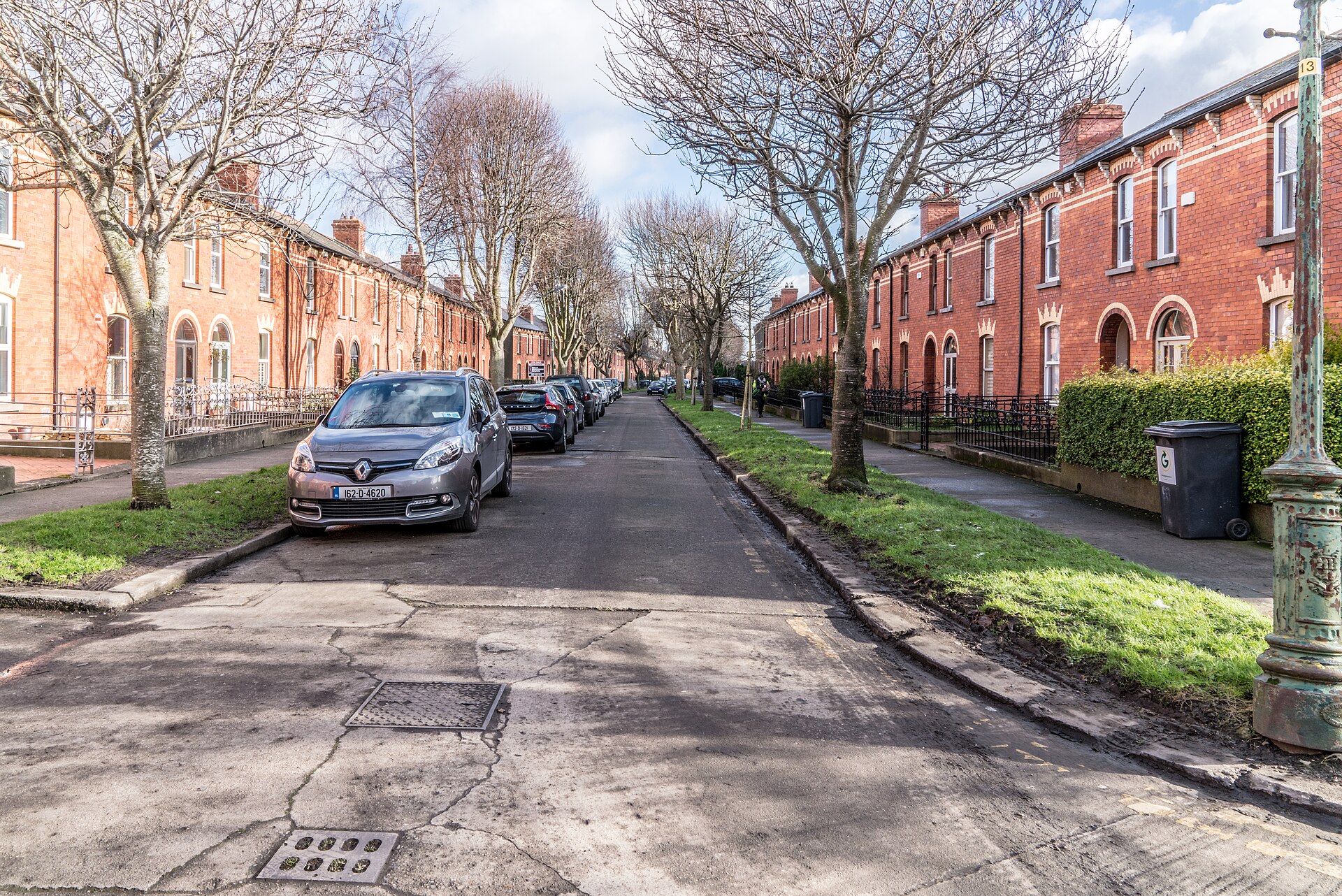
Photo: Victorian terraced houses in Shandon Crescent by William Murphy, licensed CC BY-SA 2.0, via Wikimedia Commons.
Property Management
Key takeaways A landlord can only bring an RTB dispute about a tenancy that is registered with the RTB. A tenant can bring one...
 Property Management
Key takeaways A tenant who pays rent directly to a landlord living abroad must send 20% of each payment to Revenue and pay the...
 Property Management
Key takeaways Rental profit in Ireland is added to your other income and taxed at your marginal rate, 20% or 40%, plus USC and...
Free calculators and in-depth guides to Irish housing schemes.
Go or no-go viability for AHBs, the LDA and councils, across STAR, CREL and the AHF.
Learn more →Check eligibility and estimate Cost Rental rent across Ireland.
Learn more →Work out your HAP limit and any tenant top-up.
Learn more →