
 Property Management
How much deposit can a landlord ask for in Ireland? The 1 month rule, explained
Key takeaways A landlord in Ireland can ask for a deposit of up to 1 month's rent and advance rent of up to 1...
Key takeaways
The RTB received 9,564 dispute applications in 2024. Rent arrears came up in 27% of them, deposits in 19%, and the validity of a notice of termination in 17%. Landlords brought 42% of the cases, tenants 55%.
For most landlords, a dispute is the first time they deal with the RTB as anything other than a registration form. The process is cheap and does not need a solicitor, but it has fixed deadlines that are easy to miss, and since 14 September 2026 the outcome of an adjudication is public.
This guide covers who can bring a case, what it costs, each stage from mediation to the Tribunal, how long each one takes, what the RTB can award, and the evidence that wins. Every figure comes from the Residential Tenancies Act 2004 or the RTB’s own published rules and reports, listed at the end.
On this page
Either party to a current or ended tenancy can refer a dispute to the RTB. So can a third party, such as a neighbour, who is directly affected by a landlord’s failure to deal with a tenant’s behaviour, as long as they tried to resolve it first.
There is one condition that only applies to landlords. Section 83(2) of the Act says the RTB “shall not deal with a dispute” referred by a landlord if the tenancy is not registered. The application form asks landlords for a Registered Tenancy Number. A tenant can apply without one. The RTB can give an unregistered landlord a reasonable time to register and then hear the case, but it is a delay you do not need.
The common dispute types are rent arrears, overholding, deposit retention, the validity of a notice of termination, standards and repairs, rent reviews, damage beyond normal wear and tear, and anti-social behaviour. The list in the Act is not exhaustive, so almost anything arising from the tenancy can go in.
You apply online through the RTB Service Centre, or on a paper form sent by email or post. Under the RTB’s dispute rules in force from 14 September 2026, the fees are:
| Stage | Fee |
|---|---|
| Mediation | Free |
| Adjudication | EUR 30 |
| Tribunal, after mediation | EUR 30 |
| Tribunal, appeal after adjudication | EUR 85 |
There is no longer a different price for online and paper applications. Older guides quoting EUR 15 and EUR 25 are out of date. Fees cannot be refunded once the RTB accepts the application, and a Tribunal referral sent without its fee is invalid.
You do not usually need a solicitor or barrister. The Tribunal only awards legal costs in exceptional circumstances. If you withdraw a case and the other side objects, you can be ordered to pay their preparation costs, up to EUR 1,000.
Early intervention. Before any hearing, an RTB case officer contacts both sides and explains the law that applies. In 2024, 2,967 applications were withdrawn or closed at this point, before a hearing was ever scheduled.
Mediation. Every application starts as mediation. It is free, voluntary and confidential, and usually done by phone, with the mediator calling each side separately. It lasts up to 1.5 hours. An agreement becomes a binding Determination Order, but either side can pull out in writing within 10 working days, which sends the case to a Tribunal. If either side refuses mediation, the case goes to adjudication.
Adjudication. This is a formal hearing, usually by video, lasting 1 to 2 hours. An adjudicator decides on the evidence and the law. For applications made from 14 September 2026, the hearing is held in public and the full report, with the parties’ names and the property address, is published on the RTB website. That alone is a reason to settle a weak case early.
Tribunal. A Tribunal is a full re-hearing, usually before 3 members, and the final stage at the RTB. You can appeal an adjudication to a Tribunal within 10 working days of the RTB serving the report, and the appeal must state its grounds. The day the report arrives counts as day 1. A Tribunal’s decision can only be appealed to the High Court on a point of law, within 21 days.
There is no general time limit for referring a dispute, but there are fixed ones for the disputes landlords meet most often:
The RTB board can extend a time limit on good grounds, but you should not plan on it. Late appeals after mediation are not accepted at all.
Two notice rules feed straight into validity disputes. A landlord’s notice of termination is invalid unless a copy is served on the RTB within 7 days of serving the tenant. That has been the rule since 14 September 2026, replacing the same-day rule that applied from March. And when the RTB receives its copy, it now writes to the tenant setting out their right to dispute it and the deadline.
The RTB publishes two different averages, and the difference matters. One counts every case closed in the year, including older backlog. The other counts only cases received and closed in the same year.
| 2025 average | All cases closed | Received and closed in 2025 |
|---|---|---|
| Early intervention | 4.3 weeks | 4.2 weeks |
| Mediation | 10.2 weeks | 9.6 weeks |
| Adjudication | 20.4 weeks | 14.7 weeks |
| Tribunal | 17.2 weeks | 13.4 weeks |
On those averages, an arrears case that goes to adjudication and then a Tribunal runs about 6 to 9 months end to end. Rent stays payable throughout, and section 86 means a tenancy cannot be ended while a dispute about the notice that ends it is open.
Volumes are rising. Applications in the first quarter of 2026 were 17.6% higher than a year earlier, and overholding disputes rose from 417 to 679 in a single quarter. In the second quarter of 2026, arrears featured in 31% of applications and overholding in 23%.
Every outcome is a Determination Order, which sets out what each side must do and by when. An adjudicator or Tribunal can order rent or arrears to be paid, a deposit returned, damages or costs paid, the property vacated by a date, or declare a notice of termination valid or invalid.
The amounts are capped by section 115. Damages are capped at EUR 20,000. Arrears are capped at EUR 20,000 or twice the annual rent, whichever is higher, up to EUR 60,000. Costs are capped at EUR 1,000. Since 14 September 2026 the total award is also limited to the Circuit Court’s limit for actions in tort.
If the other side does not comply, you, or the RTB, can apply to the District Court to enforce the order, and the court can make a possession order. In most cases parties bring their own enforcement proceedings. The RTB runs a legal assistance scheme for some cases, such as overholding, arrears of EUR 3,000 or 3 months’ rent, whichever is lower, and deposits of EUR 1,000 or more. In 2024 it received 485 requests, approved 348 and secured 73 court orders.
Mediation is not evidence-based, but adjudication and the Tribunal are, and the RTB will not schedule an adjudication until the required evidence is in. For an arrears or overholding case it asks for:
For a deposit case it asks for an inventory and condition report from the start and the end of the tenancy, with photos and invoices. Our guide to the deposit and advance rent rules covers what you can hold back.
Evidence has to be uploaded no later than 5 working days before the hearing. Order it by date, number the pages, and write a cover note listing what is included. Redact personal data yourself, because the RTB will not. Audio and video cannot be sent in advance, so tell the RTB beforehand if you want to show it at the hearing. The full arrears sequence is in our guide to chasing rent arrears in Ireland.
Most arrears disputes turn on two dates: when the tenant received the warning and when the RTB did. On Professional and above, an Irish rent arrears case in Rentalize Core generates the RTB rent arrears warning notice as a PDF, itemising what is owed. You serve it. When you record the date the tenant received it and the date the copy went to the RTB, Rentalize sets the 28-day deadline from the later of the two.
Before a tenancy starts, on every plan, an applicant’s record can search the RTB’s published dispute outcomes, the tribunal and adjudication orders on rtb.ie, for their name. Possible matches are listed with links to the RTB’s own documents, for a member of your team to review and record a verdict. A name match alone is not proof, and nothing is decided automatically. More on the arrears side is on our rent arrears page.
If you manage tenancies for other owners, you can book a 20-minute walkthrough or check pricing.
Mediation is free and adjudication costs EUR 30. Referring a case to a Tribunal costs EUR 30 after mediation or EUR 85 after an adjudication. These are the fees under the RTB’s rules from 14 September 2026, and there is no longer a different price for paper applications.
In 2025 the average across all cases closed was 10.2 weeks for mediation, 20.4 weeks for adjudication and 17.2 weeks for a Tribunal. For cases received and closed within 2025 the averages were 9.6, 14.7 and 13.4 weeks.
No. Section 83(2) of the Residential Tenancies Act 2004 stops the RTB dealing with a dispute referred by a landlord whose tenancy is not registered. The RTB can allow time to register and then deal with the case. A tenant can refer a dispute whether or not the tenancy is registered.
10 working days from the date the RTB serves the adjudicator’s report, and the appeal must state its grounds. A Tribunal’s decision can only be appealed to the High Court on a point of law, within 21 days of the order being issued.
Adjudication hearings are public for applications made from 14 September 2026, and the full report, including the parties’ names and the property address, is published on the RTB website. Mediation remains private and confidential.
Related reading
Sources: Residential Tenancies Act 2004 (revised, Law Reform Commission, updated to 25 September 2026), sections 22, 62, 67, 76 to 88, 93 to 100, 104, 115, 123 and 124; Housing and Residential Tenancies (Miscellaneous Provisions) Act 2026 and S.I. 434 and 497 of 2026; RTB Section 109 Dispute Resolution Procedural Rules (from 14 September 2026); RTB guides to mediation, adjudication, tribunals and evidence; RTB Annual Report 2024; RTB Director’s Quarterly Updates, May and September 2026. This is general information, not legal advice.
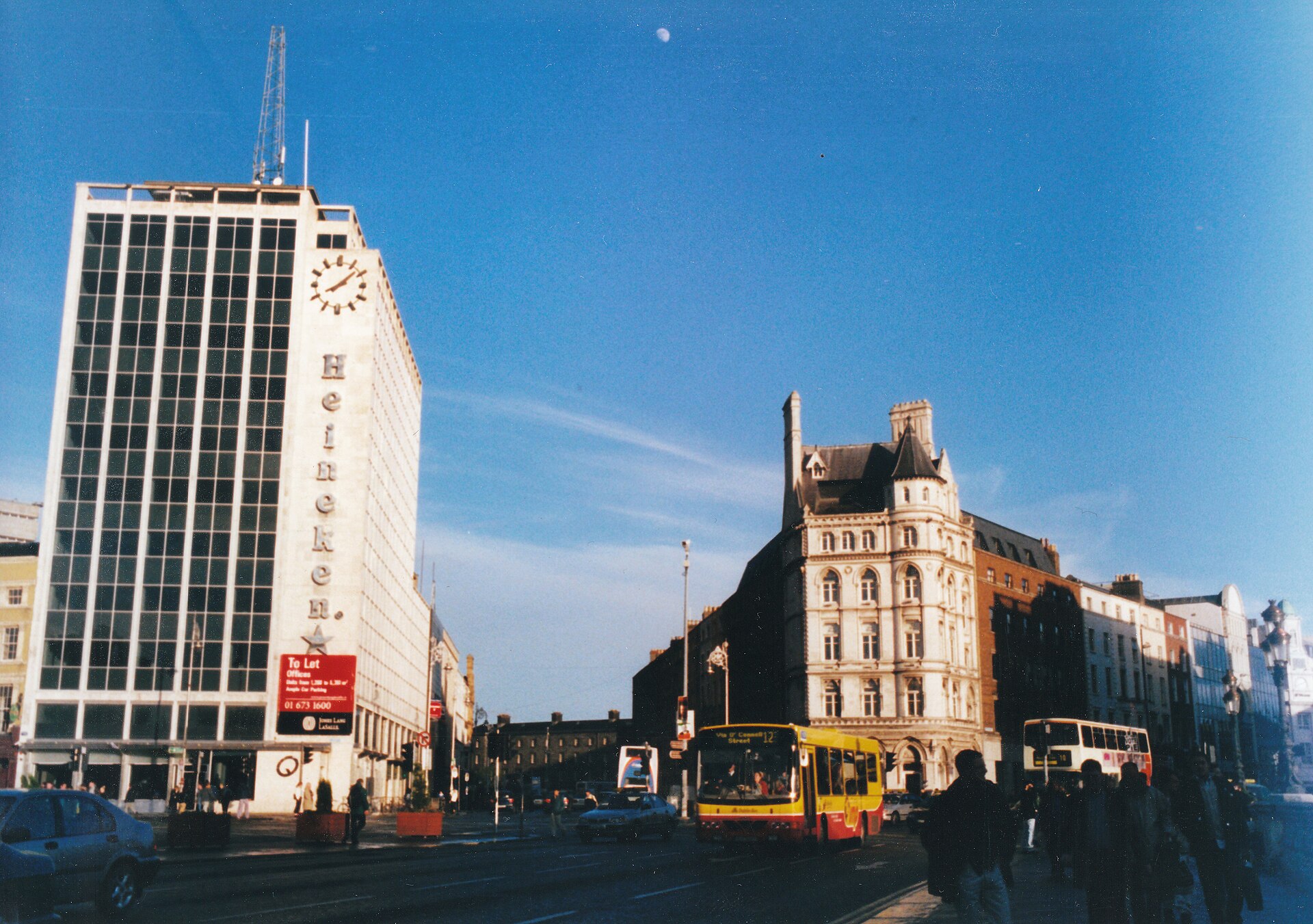
Photo: O’Connell Bridge House, Dublin by Gunnar Klack, licensed CC BY-SA 4.0, via Wikimedia Commons.
Property Management
Key takeaways A landlord in Ireland can ask for a deposit of up to 1 month's rent and advance rent of up to 1...
 Property Management
Key takeaways A tenant who pays rent directly to a landlord living abroad must send 20% of each payment to Revenue and pay the...
 Property Management
Key takeaways Rental profit in Ireland is added to your other income and taxed at your marginal rate, 20% or 40%, plus USC and...
Free calculators and in-depth guides to Irish housing schemes.
Go or no-go viability for AHBs, the LDA and councils, across STAR, CREL and the AHF.
Learn more →Check eligibility and estimate Cost Rental rent across Ireland.
Learn more →Work out your HAP limit and any tenant top-up.
Learn more →